
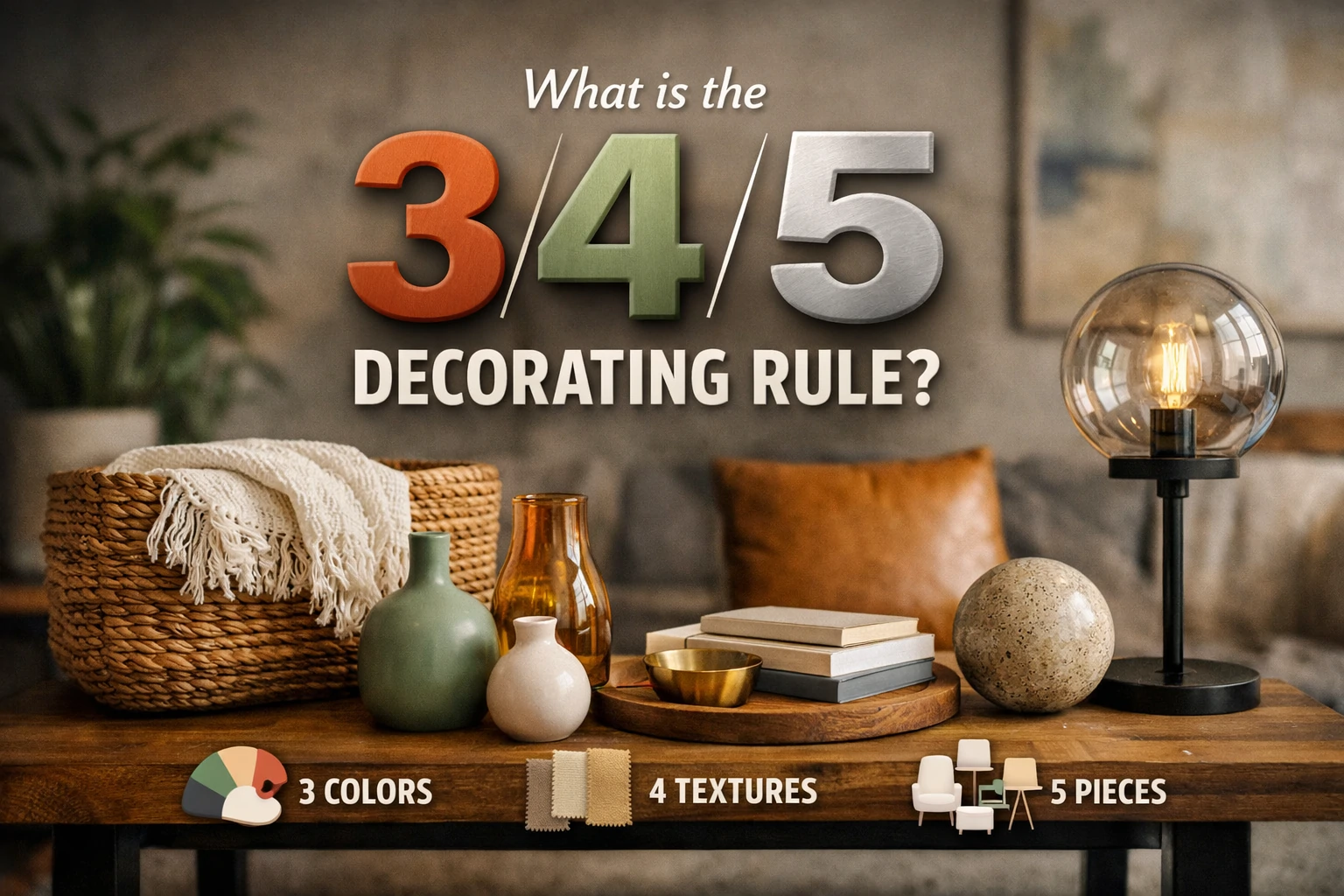
Home decor can feel confusing. You see beautiful rooms online, yet your own space may not look the same. Many people buy random items and hope everything fits together. That often leads to clutter, not style. A simple design rule can fix that problem.
The 3/4/5 rule for decorating gives structure to your choices. It helps you pick colors, textures, and objects in a balanced way. This method works in living rooms, bedrooms, offices, and even small apartments. You do not need design training to use it. You only need a clear plan and the right mix.
The Basic Idea Behind the 3/4/5 Rule
The 3/4/5 rule helps you group items in smart numbers. Designers use odd numbers because they create better visual balance. The rule often means you combine three colors, four textures, and five decorative elements in a space. Some designers also apply it to shapes or patterns. The key idea stays the same. You limit choices to avoid chaos.
Three main colors create harmony. Four textures add depth. Five decor items complete the look without crowding the room. This system keeps your design focused. It prevents overload and makes the space feel calm.
People like rooms that feel balanced. Too many choices confuse the eye. Too few make a room feel plain. The 3/4/5 rule sits in the middle. It gives structure without removing creativity.
Why This Rule Works So Well
Our eyes enjoy order. When a room follows a pattern, it feels peaceful. Odd numbers create movement. They stop the design from looking stiff or too perfect.
A group of three items looks natural. A mix of four textures adds contrast. Five decor pieces create interest without stress. This balance keeps the space alive but controlled.
You also avoid impulse shopping. The rule forces you to plan. It gives limits that protect your budget. Instead of filling shelves with random items, you choose pieces that serve a clear purpose.
How to Apply the Three-Color Principle
Color sets the mood of a room. The three-color system helps you avoid visual noise. Pick one main color. Choose a second color that supports it. Add a third color as an accent.
Your main color covers large areas such as walls or sofas. The second color appears in rugs or curtains. The accent color shows up in pillows, art, or small decor items. Each color should appear more than once. That repetition creates unity.
Here is a simple example:
| Role | Example Color | Where to Use |
|---|---|---|
| Main | Soft Beige | Walls, Sofa |
| Secondary | Navy Blue | Curtains, Rug |
| Accent | Mustard | Pillows, Vase |
Do not pick shades that clash. Stay within warm tones or cool tones. Harmony keeps the room calm. Bold contrast works best in small doses.
The Four-Texture Method for Depth
Flat rooms look dull because they lack contrast. Texture adds life and dimension, and the four-texture method creates depth without clutter. Combine materials that feel different from each other to build visual interest.
You can mix wood, fabric, metal, and glass, or use cotton, leather, wool, and stone. Each material adds character, but too many textures cause confusion. Four distinct surfaces provide enough variety to keep the space rich, layered, and balanced.
Here is a helpful example:
- Wood coffee table
- Linen sofa
- Metal lamp
- Glass decor piece
This mix keeps the space balanced. No single material dominates the room.
The Five-Element Decorative Balance
Decor items complete the design. Too many objects make a space look crowded. Five carefully chosen pieces feel intentional.
You can choose art, plants, books, candles, or sculptures. Each item should serve a purpose. Avoid filling empty areas just to avoid blank space. Empty space also matters in design.
Here is a balanced example for a living room shelf:
| Item | Purpose |
|---|---|
| Framed Art | Adds color |
| Small Plant | Brings life |
| Stack of Books | Adds height |
| Candle | Soft detail |
| Ceramic Bowl | Shape contrast |
This arrangement feels full but not heavy. Each piece supports the overall style.
How the Rule Fits Small Spaces
Small rooms benefit the most from this rule. Limited space demands careful planning. Three colors prevent visual clutter. Four textures add character without chaos. Five decor items avoid overcrowding.
Apartments and studio spaces often feel tight. Clear structure creates breathing room. Light colors as the base help open the space. Soft textures make it cozy without weight.
You can also use vertical areas wisely. Shelves and walls offer room for decor. The rule keeps those areas neat instead of messy.
Smart placement makes even small rooms look polished. Many problems in compact spaces happen because of layout errors, which designers often describe as common living room layout mistakes.
Mistakes People Often Make
- Treating the rule as strict law instead of a flexible guide
- Choosing random colors just to reach the number three
- Mixing textures that clash harshly instead of blend naturally
- Adding five items to every surface instead of selecting key pieces
- Ignoring empty space, which is also part of good design
- Focusing on numbers more than overall harmony
Can You Adjust the 3/4/5 Rule?
Design allows flexibility. You can adjust the rule to suit your needs. Some rooms may use three textures and still feel complete. Large rooms might handle more layers.
The goal stays the same. You want balance and control. Stick to the idea of limited variety. Too much freedom leads to clutter. Structure keeps your design clear.
Think of the rule as a framework. It supports creativity instead of blocking it.
Why Designers Trust Simple Systems
Professional designers rely on clear systems because rules create consistent results. A structured approach saves time, controls costs, and reduces mistakes.
Clients often feel unsure about style choices, so clear guidelines lower stress and improve confidence. The 3/4/5 method works across modern, classic, farmhouse, and minimalist spaces. Simple structure often creates the strongest impact, and smart balance matters more than price.
Quick Reference Guide
Here is a short summary to help you remember:
- Use three main colors in one room
- Combine four different textures
- Add five key decorative elements
These numbers guide your choices. They prevent overload and support harmony.
How This Rule Improves Everyday Living
A balanced room affects mood and supports daily comfort at home, especially in family spaces where routines matter most. You can see how home structure supports daily life in this guide on parenting and home balance.
You may notice better flow in your home. Guests feel welcome in well-planned spaces. Clutter often creates mental noise. Clean balance supports clear thinking.
Decor should serve life, not control it. The 3/4/5 rule keeps your home comfortable and stylish at the same time.
Final Thoughts
The 3/4/5 rule for decorating offers simple structure. Three colors build harmony. Four textures add depth. Five decor elements complete the look. This method creates balance without stress.
You do not need expert skills to use it. Careful planning and clear limits make a big difference. Small rooms benefit. Large rooms gain structure. The result feels calm, polished, and intentional.
Design should feel enjoyable, not overwhelming. This rule gives direction without pressure. Use it as a guide, trust your taste, and create a space that feels right for you.