Your living room sets the mood for your home. It is the place where guests sit, family talks, and daily life unfolds. A good layout makes the room feel open, calm, and easy to use. A poor layout creates stress, blocks movement, and wastes space.
Many people focus on buying nice furniture but forget how they place it. The problem often starts with small choices. A sofa may sit in the wrong spot. A TV may take over the wall. Chairs may feel too far apart. These issues seem minor at first, yet they shape how the room feels every day. This guide explains common living room layout mistakes and shows how to fix them in a simple way.
Pushing All Furniture Against the Walls
Many people think that furniture must touch the walls to make a room look bigger. This idea often does the opposite. The room may feel empty in the center and stiff around the edges. Space looks wide, but the seating area feels cold and far apart.
When every piece hugs the wall, conversation becomes hard. People must raise their voices across the room. The space lacks warmth and balance. It may look like a waiting area instead of a home.
Try to float some pieces away from the wall. A sofa can sit a few inches forward. Chairs can form a circle around a rug. Even in small rooms, a little shift can change the mood. The goal is to create a clear seating zone that feels close and natural.
Blocking Natural Walkways
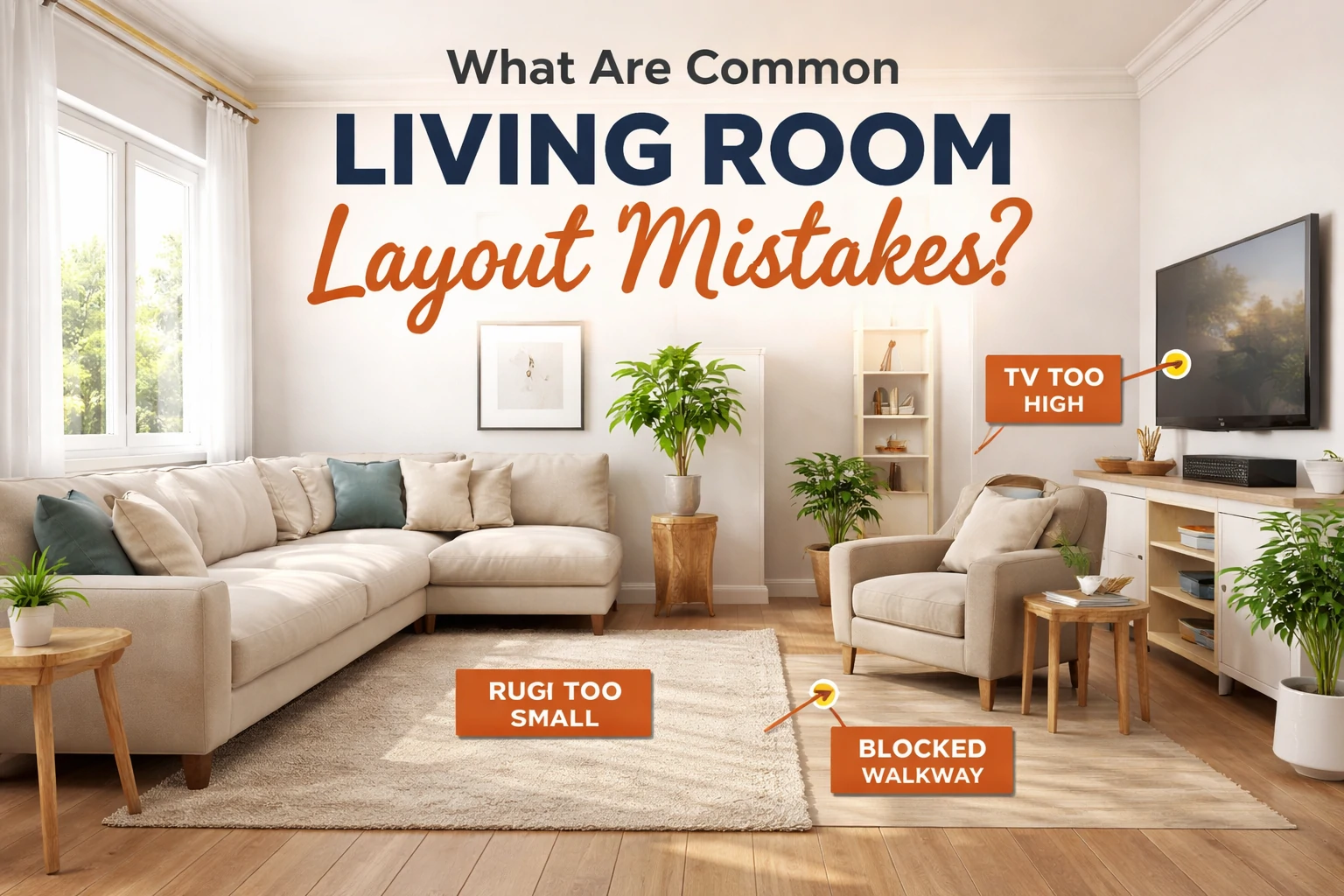
A living room must allow easy movement. Some layouts force people to squeeze between tables or step around chairs. This makes the room feel tight and awkward.
Good design respects clear paths. You should walk from one side of the room to the other without bumping into furniture. Doors, windows, and hallways must stay open and easy to reach.
Use this simple guide for walking space:
| Area Between Items | Ideal Space |
|---|---|
| Sofa and coffee table | 14–18 inches |
| Main walk path | At least 30 inches |
| Chair and side table | 12–16 inches |
Clear paths help the room feel open and calm. The layout should guide movement, not block it.
Choosing the Wrong Rug Size
A rug anchors the seating area. Many people buy one that is too small. A tiny rug makes the furniture look like it floats without support. The room feels broken into parts instead of one whole space.
A proper rug should sit under at least the front legs of sofas and chairs. This creates unity. It also adds comfort underfoot and helps define the space.
Large rugs may seem costly, yet they improve the look in a big way. When the rug fits well, the room feels complete. Size matters more than pattern in most cases.
Ignoring a Clear Focal Point
Every living room needs one strong focus. This may be a fireplace, a window view, or a TV. Trouble begins when the layout ignores that focus or tries to center around two main points at once.
A room without direction feels scattered. Seating may face random angles. People may not know where to look. This causes visual stress.
Choose one main anchor. Place the sofa and chairs in a way that supports that feature. If the room has both a fireplace and a TV, decide which one leads. Then adjust the other in a quiet way. Clear focus brings balance.
TV Height and Distance Issues
TV placement can cause layout problems. Some people mount the screen too high above a fireplace. Others place the sofa too far from the wall. This setup strains the neck and reduces comfort. It can also make the room feel off balance.
The center of the screen should sit near eye level when you sit on the sofa. Viewing distance also matters. A screen that sits too close can strain the eyes. A screen too far away can reduce clarity. Use this simple guide:
| TV Size | Ideal Viewing Distance |
|---|---|
| 43-50 inch | 5-7 feet |
| 55-65 inch | 7-9 feet |
| 70+ inch | 9-12 feet |
The TV should support the layout, not control it. Blend it into the wall with shelves or simple decor. Focus on comfort when you choose placement.
Using Furniture That Is Too Large
Large furniture can overwhelm a small room. Oversized sofas and deep chairs eat up floor space. The room feels crowded even when few items exist.
Scale matters more than style. A slim sofa with raised legs may suit a compact room better than a bulky sectional. Measure the space before you shop. Leave enough room for movement and balance.
This quick list helps with size planning:
- Measure wall length before you buy a sofa
- Check door width for delivery access
- Leave space between items for flow
Smart sizing prevents regret later.
Creating Too Much Space Between Seats
A living room should support easy conversation. When seats sit too far from each other, people struggle to talk in a natural way. Voices rise, and the space feels cold. Distance can create a sense of separation instead of comfort.
Arrange sofas and chairs within a close and relaxed range. People should speak at a normal tone and feel connected. Coffee tables and ottomans can help bring seating areas together. Proper spacing does not cause crowding. It creates warmth, comfort, and better flow in the room.
Relying on One Ceiling Light
Lighting shapes how a room feels. Many homes rely on one ceiling light. This creates harsh shadows and flat space. A living room needs layers of light.
Use a mix of floor lamps, table lamps, and soft overhead light. Place light near seating areas. Add warm tones for comfort. Avoid bright white light that feels cold.
Good lighting supports each part of the layout. It highlights focal points and makes dark corners useful. A layered setup brings warmth and depth.
Too Many Pieces in One Room
Some people try to fill every corner. Extra chairs, side tables, and decor items may clutter the space. The room loses breathing room.
Empty space has value. It allows the eye to rest. It helps key items stand out. Select fewer pieces with purpose.
Use this rule as a guide:
| Room Size | Ideal Main Seating Pieces |
|---|---|
| Small | 1 sofa + 1 chair |
| Medium | 1 sofa + 2 chairs |
| Large | Sectional + 2 chairs |
Balance matters more than quantity. Choose wisely.
Wall Art Out of Proportion
Art that hangs too high or too small creates imbalance. A tiny frame above a wide sofa looks lost. Large blank walls also feel cold.
Hang art at eye level. Group smaller pieces together to create impact. Wall decor should relate to furniture size. Scale keeps the room balanced.
Shelves can also help fill vertical space. They add storage and style. Walls deserve attention as much as floors.
Layout That Ignores Daily Life
Many living room layouts look great in photos, yet real homes have daily movement and noise. A design that seems stylish may not suit your routine. A glass coffee table may not work well with young children. Sharp edges can create risk, and a tall lamp near a busy path can fall with one small push. Furniture must match how people walk, sit, and relax in the space.
Think about your habits before you fix the layout. Do guests visit often, or do kids play on the floor? Do pets move through the room each day? Each detail should guide placement and material choice. Practical decisions reduce stress and improve comfort. A layout that fits your lifestyle will feel natural and last longer.
Room Feels Visually Uneven
Balance creates a sense of calm. A room with heavy furniture on one side and empty space on the other feels off. The eye quickly notices the uneven look. This imbalance can make the space feel tense.
Symmetry does not require perfect matches. Two chairs placed across from a sofa can create harmony. A pair of lamps on each side of a console adds structure. Simple pairings help the room feel organized.
Distribute visual weight with care. Mix shapes and textures in a thoughtful way. Spread large and small pieces across the room. A balanced layout feels steady, comfortable, and inviting. Balanced rooms also feel connected from one space to another. You can find more ideas in this guide on seamless interior design.
Forgetting Storage Solutions
Clutter can ruin even the best layout. Remote controls, books, and small items pile up fast. The room starts to feel crowded and messy. Good design loses its impact when surfaces stay full.
Smart storage keeps the space neat. Use baskets, cabinets, or a storage ottoman to hide daily items. Keep what you need within reach but out of sight. A clean room feels calm and balanced.
Storage also affects placement. Leave space for drawers and doors to open with ease. Think ahead before you fix furniture in place. Careful planning keeps the layout both tidy and practical.
Sticking to One Layout Idea
Many people pick one layout idea and never try another. They copy a design from a photo and expect it to fit their home. Each living room has a unique shape, size, and light. A setup that works in one space may not suit another.
Small changes can improve comfort and flow. Move the sofa. Adjust the chairs. Test different angles. A flexible approach helps you find a layout that feels right for your daily life.
Simple Ways to Improve Your Layout
A living room layout shapes comfort, mood, and daily life. Small mistakes can create stress and block flow. Good design focuses on balance, clear paths, proper scale, and real-life use. Thoughtful placement of furniture, rugs, and light makes the room feel warm and easy.
Take time to measure, plan, and test. Avoid common errors like wrong rug size, blocked walkways, or oversized furniture. Focus on comfort and connection. When the layout works well, the living room becomes a place where people relax, talk, and feel at home.
You may also like this guide on current interior design trends for more ideas to refresh your space.