
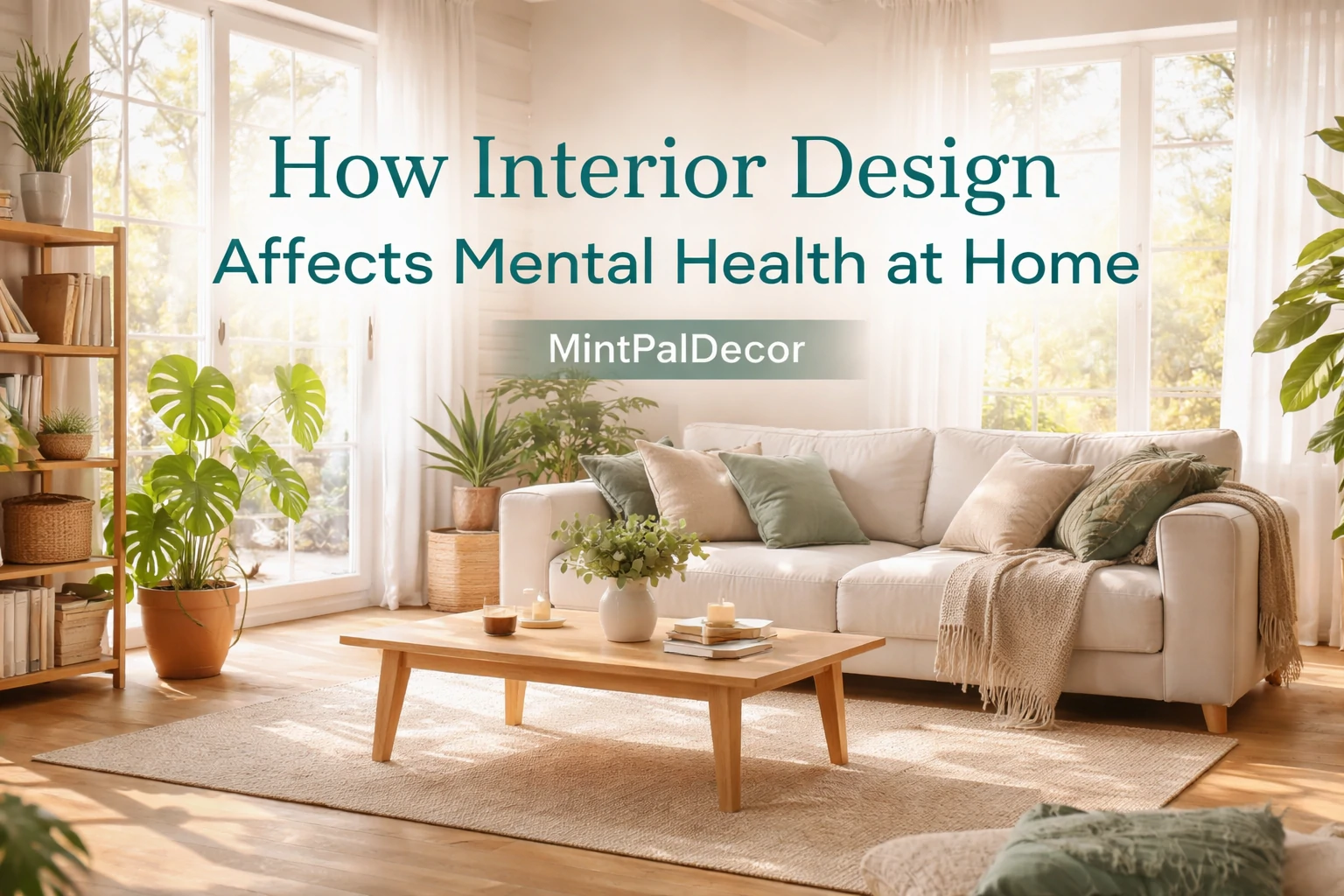
Interior design is not just about how a home looks. It also plays a strong role in how people feel. The layout, light, colors, and textures around you can affect your brain. They can lift your mood or bring it down. They can calm your stress or add to it. Your home speaks to your mind even when you do not realize it.
A peaceful home helps your brain rest. A bright and open space can make you feel alive. A messy or dark space may do the opposite. This article will show you how design affects mental health. You will see how small changes in your space can help your mood, sleep, and focus. You will also learn design tips that support a calm and balanced life.
How Your Mind Reacts to a Room
The human brain reacts fast to the places we live. Open space tells the brain to relax. Tight corners or crowded rooms send a warning. Your senses feel every detail, from the light on the wall to the feel of the floor.
A clear path through a room makes you feel safe. A blocked walkway can raise stress. If your home has too many objects, your brain works harder to filter them. This creates mental noise.
Simple layouts work best for calm. One open area may help more than three small ones. Less clutter means less stress. Open shelves, clean tables, and clear floors give the brain a break. The brain works best in spaces that feel safe, ordered, and full of light.
Light: The Most Powerful Design Element
Natural light wakes the brain. It controls the body’s sleep-wake cycle. This cycle affects mood, energy, and focus. A dark home confuses this rhythm. People may feel tired or moody without knowing why.
Sunlight also raises serotonin. This is a brain chemical that helps you feel happy. Even one bright window can change how a room feels. Homes with large windows often feel more joyful and alive.
Use sheer curtains to let in light. Add mirrors to reflect it. Keep windows clear of tall plants or furniture. Choose workspaces near daylight. Use warm lamps at night to help your body wind down.
How Color Affects the Way You Feel
Color plays a powerful role in how you feel. It sends quick signals to the brain and can shift your mood within seconds. Some colors slow you down. Others lift your energy.
Use these color effects to guide your choices:
- Soft green: Calms the mind, eases tension
- Pale blue: Creates peace and supports focus
- Beige or taupe: Feels safe, steady, and neutral
- Muted yellow: Adds warmth without stress
- Soft grey: Brings quiet and stillness
- Bold red or orange: Boosts energy, suits social spaces
- Deep colors in large amounts: Can overstimulate and distract
Tips for using color:
- Keep strong colors as accents (pillows, rugs, art)
- Let walls and large areas stay neutral to give the eyes rest
- Match color choices to the room’s purpose (rest vs. energy)
This layout helps readers scan and apply color psychology quickly. Let me know if you want the Lighting section or Plant selection rewritten in bullet format too.
How Surfaces Shape Comfort and Mood
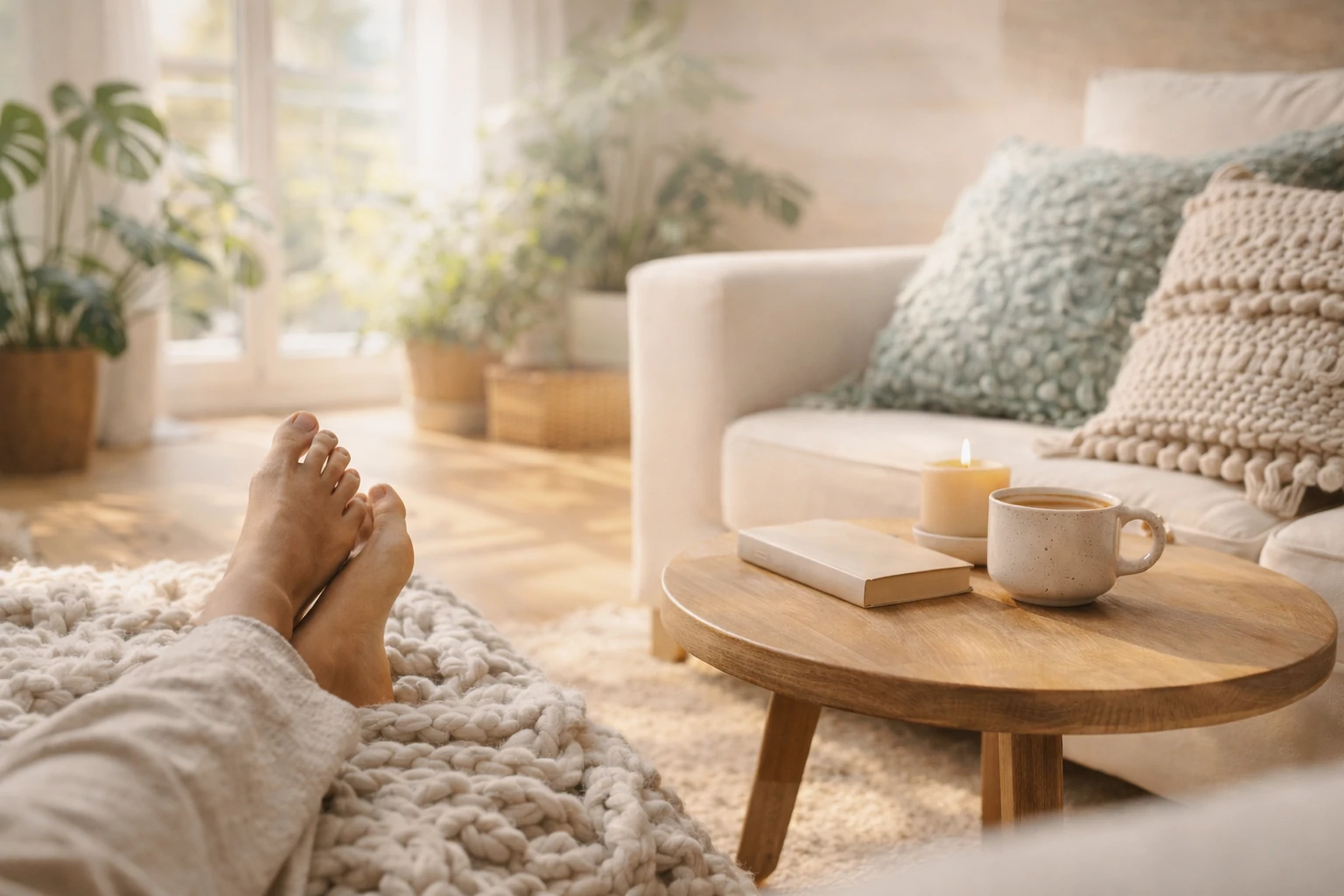
Texture plays with the sense of touch. Your skin reads smooth, rough, soft, or hard. These textures talk to your brain. They shape how you feel about a space.
A soft rug under your feet makes you feel safe. A smooth couch gives calm. A wall of rough stone may ground you. Natural textures like wood, linen, or wool can lower stress. They bring nature indoors.
You do not need many types. Just choose the right ones. Too many textures can confuse the brain. Start with one soft rug and one wood piece. See how it makes you feel. Then add or remove from there.
How Clutter Affects the Mind
Clutter drains the brain. Each item in view adds to the brain’s load. This causes mental stress. It blocks focus and can harm sleep.
Your mind works best in order. Clean counters and empty corners help the brain rest. They give your mind space to breathe.
Tidy homes are not always about cleaning. They are about peace. Put items in boxes, baskets, or drawers. Label them. Use open shelves for what brings you joy. Hide what does not. A clean room helps you feel calm and in control.
How Plants Make You Feel Better
Plants do more than add beauty to a room. They offer real mental health benefits through sight, touch, and air quality.
How plants help your mind
- Lower stress and reduce tension
- Improve focus and mental clarity
- Slow the heart rate and calm nerves
- Add life, color, and softness to a space
- Clean indoor air and increase oxygen
- Connect your brain to natural rhythms
Easy indoor plants for beginners
- Snake plant: Low light, low care
- Peace lily: Air-purifying and elegant
- Pothos: Fast-growing and forgiving
- ZZ plant: Durable and drought-tolerant
- Spider plant: Bright, playful, and resilient
Placement tips
- Keep near windows for light access
- Avoid overwatering most plants prefer dry soil between waterings
- Use planters that match your decor for a calm, unified look
- Even one plant in a small room can shift the mood
Plants bring a sense of care and growth into your home. They help your space feel alive.
Furniture That Supports the Mind
Furniture affects more than posture. It can also shape your thoughts. A chair that fits your body can help you focus. A sofa that holds your shape can calm you down.
You sit, rest, and think on furniture. If your seat is too hard or too soft, your body feels stress. That stress moves to your mind. You start to feel tense, even if you do not know why.
Supportive chairs and beds protect mental balance. Choose furniture with soft curves and solid bases. Avoid sharp edges or strange angles. Comfort brings clarity. Good support keeps your mood steady.
Biophilic Design and Mental Peace
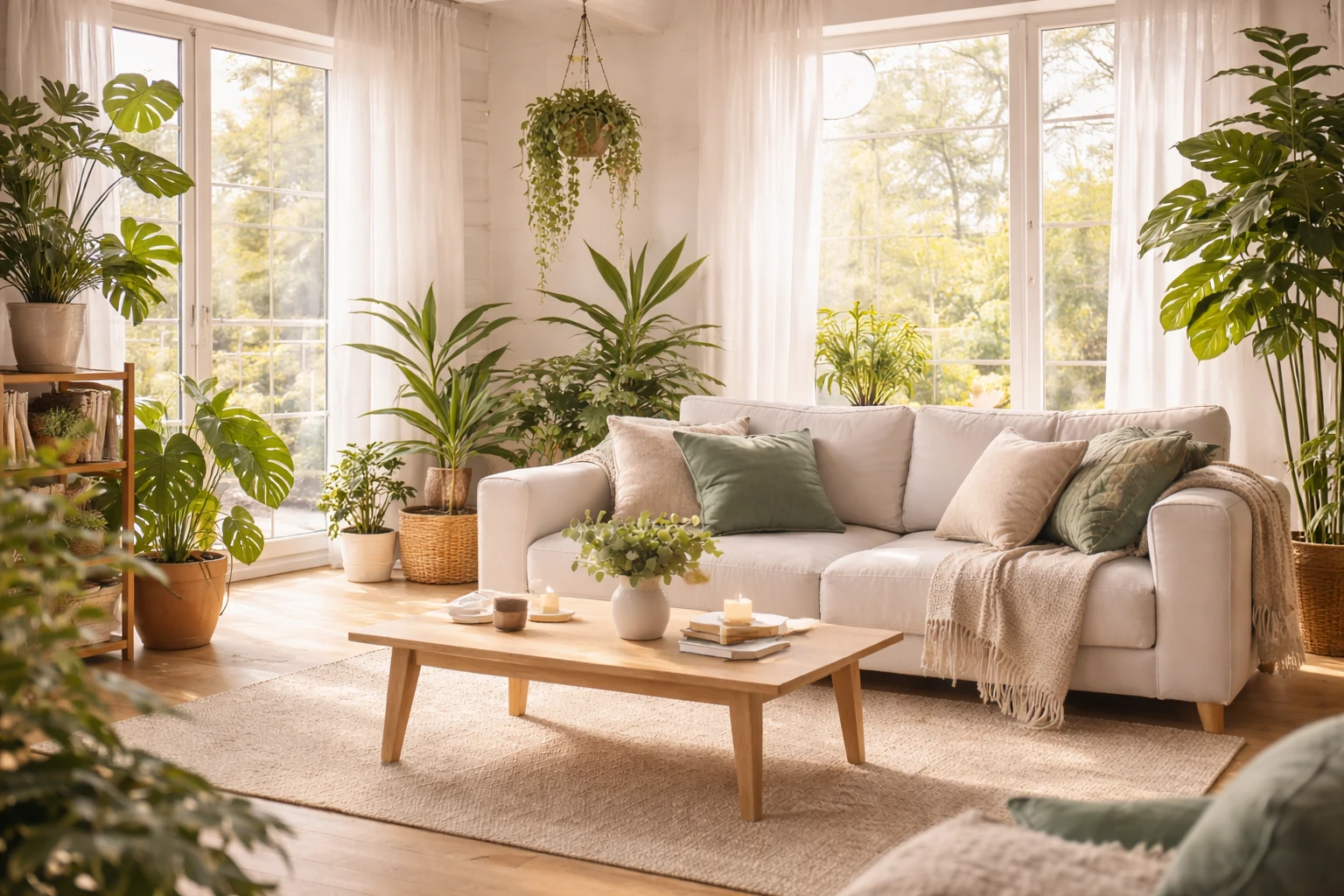
Biophilic design brings nature into homes. It links people with green life, flowing shapes, and natural light. This kind of design lowers blood pressure and reduces anxiety.
Homes that copy nature feel calm. They have wood floors, leaf shapes, and water sounds. Even photos of trees can help your brain rest. A room with nature details gives the body a signal that it is safe.
Nature speaks to a deep part of the mind. We evolved outdoors. When you bring the outside in, your brain remembers. That memory helps you breathe slower and feel calm.
Lighting That Guides Emotion
Light controls how we feel. Bright light sharpens focus. Dim light brings rest. The wrong light makes people feel uneasy. That can disturb both thoughts and sleep.
Natural light works best. It gives the body cues to rise, think, and rest. When the sun goes down, warm indoor light should follow. Avoid cold white light at night. It tricks the brain into staying alert when it should be slowing down.
Use soft bulbs near your bed. Place lamps where you read or work. One well-placed light can shape how a room makes you feel.
Sound, Silence, and Design
Your home is full of sound. Every noise tells the brain something. Some sounds raise tension. Others relax you. Even silence can affect the mind.
Hard floors echo. That echo creates stress. Rugs absorb sound. So do curtains and cushions. These soft materials quiet a room. The brain loves that stillness.
You can add white noise for calm. A small fan or soft music helps many people sleep or focus. Try placing fabric near walls and ceilings to soften echoes. Less noise often means less worry.
Create Zones With Purpose
Your brain likes knowing what a space is for. A dining space should not also be a workspace. When the brain sees two jobs in one room, it becomes confused.
Divide each area in your home. Use rugs, lamps, or color to show what each part does. A reading nook needs a chair, a lamp, and silence. A work desk needs light and no clutter. A rest area needs soft surfaces and warm light.
Clear zones lead to clear thinking. You do not need more space. You just need smarter space.
The Bedroom as a Mental Reset
The bedroom is the brain’s rest zone. It should be your calmest room. If it feels crowded or cold, sleep suffers. Bad sleep affects mood, focus, and energy.
Use soft tones on walls. Add thick curtains to block morning light. Choose bedding that feels clean and soft. Keep screens far from your pillow. They keep the brain awake longer.
A good night’s sleep starts with good design. Make your room a place your brain wants to rest.
Your Daily Habits Start With Design
Each habit begins in a space. You get out of bed, walk to the kitchen, sit at your desk. The shape of your home leads the mind. It tells your body what comes next.
A messy kitchen makes people skip breakfast. A cluttered bathroom causes stress before the day even starts. A calm, organized space leads to clear habits. That brings better mental health. Even a small change, like a tidy shelf or a bench by the door, can shape a better morning.
Let your design support the life you want. Make each room match one task. Let that task bring peace, not pressure.
Let Your Space Show Who You Are
Your home should show who you are. Your history, values, and dreams should live on the walls and shelves. This kind of design connects you to your own identity. That brings peace.
Place one photo that reminds you of strength. Add art that makes you feel proud. Pick colors from places that shaped you. When a home reflects your truth, your mind feels safe. Your story becomes part of the space.
Do not follow every trend. Choose objects that carry meaning. This is how design builds joy.
Curious about what makes design so engaging? See why interior design is interesting on MintPalDecor to explore the deeper reasons people connect with their spaces.
Simple Homes, Stronger Minds
A crowded room makes the brain work harder. Every item needs attention. That extra noise in your head adds pressure. A simpler space helps you breathe.
Minimalism does not mean empty. It means clear. You keep what matters and remove what distracts. This reduces mental load. That gives space for calm.
Start with one drawer. Then one shelf. Do not rush. Just remove what no longer brings peace. Let space grow one corner at a time.
Design Choices and Their Mental Effects
Each part of your home sends signals to your brain. Small design choices can change how you feel without you noticing.
| Design Choice | Mental Effect |
|---|---|
| Natural light | Boosts mood, regulates sleep cycle |
| Soft, cool colors | Calms nerves and reduces stress |
| Clutter-free layout | Clears mental fog and helps focus |
| Soft textures (rugs, fabrics) | Brings comfort and emotional safety |
| Houseplants or greenery | Lowers stress, improves air and focus |
| Warm lighting at night | Helps the body relax and wind down |
| Loud colors or crowded décor | Can raise anxiety and block rest |
| Defined room zones | Supports task clarity and mental flow |
| Personal items or photos | Creates emotional safety and identity |
These small choices build up. They guide your behavior, mood, and daily rhythm without effort.
Want to improve your own design choices? Read how to be better at interior design on MintPalDecor for simple tips that work in real homes.
Real People Who Changed Their Space
Many people see big changes with small design steps. One woman added soft lights to her living room and began to sleep better. One man cleared his work desk, and his focus and mood both improved. A family added a plant wall, and their mornings became calm. These stories prove the point, design is not about money or trend. It is about care. When you shape your home with care, it gives care back. The space becomes more than walls. It becomes your support.
Your Home Can Support Your Mental Health
Your home holds power. It holds your thoughts, your sleep, your joy. It also holds stress if you let it. Each color, light, sound, and shape sends signals to your brain. These signals build habits. They form emotions. They shape your day.
Interior design can lift or lower your mental state. That is the truth. But the good news is this: You can take control. You can remove one object. You can shift one lamp. You can make one change that helps your mind.
You do not need a big home. You do not need to spend much. You only need to think with care. Shape your space with calm. Let it speak peace to your brain.
This is how interior design affects mental health. This is what MintPalDecor believes. This is how your space becomes your support.



Pingback: Interior Design Trends 2026: What’s Changing at Home