How smart design changes your home
Smart design changes how you use each room. It gives you control through apps, voice, or simple switches. You do not need to move around much to manage daily tasks. This saves effort and keeps your routine smooth.
Rooms feel more organized with smart setups. Devices work together, so clutter reduces. You can adjust lights, temperature, and sound without extra tools. This creates a calm and neat space that supports your lifestyle.
Energy use also improves with smart systems. Lights turn off when not needed. Cooling and heating adjust based on your habits. This helps reduce waste and keeps bills lower over time.
Key elements of smart home interiors
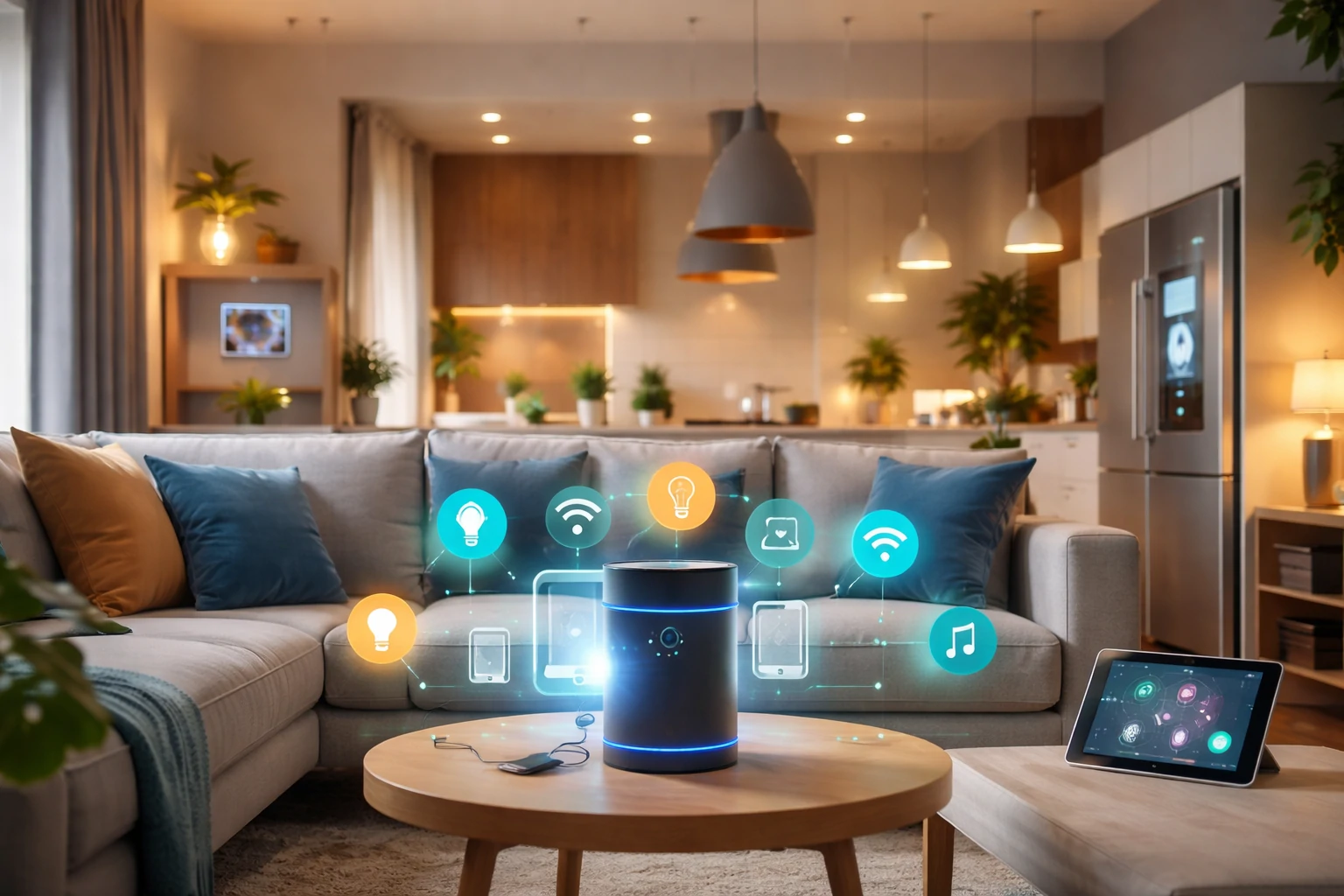
Smart homes rely on a mix of design and technology. Each part plays a role in comfort and ease. The goal is balance, not overload.
Main elements include:
- Smart lighting systems
- Automated temperature control
- Voice assistants
- Smart security devices
- Multi-use furniture
- Hidden wiring and clean layouts
Each element works with the others. A well-planned setup feels natural, not complex. You should not feel confused when using your home.
Smart lighting that sets the mood
Lighting plays a big role in smart home design. It can change the feel of a room in seconds. You can control brightness, color, and timing with ease through your phone or voice. This gives you full control over your space and helps you create the right mood at any time.
Smart lights can adjust based on the time of day. Soft light in the evening helps you relax, and bright light in the morning keeps you active. You can also turn lights on or off without touching a switch. This adds comfort and makes life simple. A good lighting setup also highlights furniture and décor in a clean and modern way.
Smart furniture and space use
Smart furniture helps you use space in a better way. Many homes have limited space, so each item should serve more than one purpose. Beds with storage, foldable tables, and modular sofas make rooms more useful. These options help you keep your home neat and easy to manage.
Some furniture also includes built-in technology. You may see charging ports, speakers, or lights inside tables or beds. This reduces the need for extra devices and loose wires. Space planning also becomes simple, since one room can serve many needs. A living room can turn into a work area or a guest space, which adds real value to your home.
Voice control and automation
Voice control makes smart homes easy to use. You can give simple commands to control devices. Lights, fans, TVs, and more respond in seconds. This saves time and effort.
Automation takes things further. You can set routines for daily tasks. Lights turn on at a fixed time. Curtains open in the morning. Temperature adjusts based on your habits. This creates a smooth and stress-free experience.
Many systems connect with mobile apps. You can control your home even when you are not there. This adds both comfort and peace of mind.
Smart security and safety features
Security is a key part of smart home design. Cameras, sensors, and alarms help keep your home safe, and you can monitor everything in real time through your phone. Smart locks add extra control, so you can lock or unlock doors without keys and track who enters your home.
Fire alarms and leak sensors also protect your space. These devices send quick alerts if they detect danger. Fast updates help you take action early and avoid serious damage.
Choosing the right smart devices
Not every device fits every home. You need to choose what suits your needs. A simple setup often works better than a complex one.
Factors to consider:
| Factor | Why it matters |
|---|---|
| Budget | Helps avoid overspending |
| Compatibility | Ensures devices work together |
| Ease of use | Keeps control simple |
| Design style | Matches your home look |
| Energy use | Saves power and reduces cost |
A smart home should feel natural. Devices should support your lifestyle, not control it.
Smart design for different rooms
Each room has different needs, and smart design adjusts based on how you use the space. A good setup makes every room more useful and comfortable. It also helps you manage daily tasks with less effort and better control.
Living room
The living room often needs smart lighting and sound systems. You can set the right mood for movies, guests, or family time. Smart TVs and speakers improve your entertainment and keep everything easy to control from one place.
Bedroom
Comfort matters most in the bedroom. Smart beds, soft lighting, and climate control help you relax after a long day. You can set simple sleep routines that support better rest and a calm environment.
Kitchen
The kitchen works better with smart appliances. Smart ovens, fridges, and lights help you cook with ease and save time. These tools also help you stay organized and manage daily meals without stress.
Bathroom
Smart mirrors, lights, and temperature control add comfort to your routine. You can create a calm and fresh feel at home. Small upgrades in this space can make daily use more relaxing and smooth.
Smart ways your home improves
Smart design offers many benefits. It improves comfort, saves time, and adds value to your home.
Main benefits:
- Better control over daily tasks
- Lower energy use
- Improved safety
- Clean and modern look
- Flexible use of space
A smart home also increases property value. Many buyers look for homes with modern features. This makes it a good long-term choice.
Common mistakes you should avoid
✔ Adding too many devices at once can create confusion and clutter
✔ Focusing only on tech and ignoring design can make the home feel cold
✔ Not planning ahead can lead to poor device connection
✔ Buying devices without checking compatibility can cause issues
✔ Choosing complex systems can make daily use harder
Future of smart home interiors
Smart homes will keep growing with new technology that adds more comfort and control. Homes will become more responsive and may learn your habits to adjust settings on their own, which reduces manual effort. Design will also improve with cleaner, minimal spaces and more hidden technology that keeps the focus on comfort and style.
Top smart home interior design trends
| Trend | Meaning | Benefit |
|---|---|---|
| Voice control | Hands-free control | Easy use |
| Smart lighting | Mood-based lights | Better comfort |
| Multi-use furniture | Space-saving design | More room |
| Energy systems | Auto power control | Lower bills |
| Hidden tech | Built-in devices | Clean look |
Smart home interior design offers a new and better way to live. It blends comfort, style, and technology into one simple system. A well-planned home feels easy to use and makes daily life more smooth and relaxing.
You do not need expensive tools to begin. Small changes can still improve your home in a big way. Focus on your real needs and choose simple solutions that fit your lifestyle. A smart home should make life easier and more comfortable, not complex.
Quick Questions
Q. What is smart home interior design?
It uses simple technology to control lights, temperature, and devices in an easy way. It makes your home more comfortable and simple to manage.
Q. How does a smart home help in daily life?
It saves time on small tasks like lights and temperature control. You can manage everything quickly through phone or voice.
Q. Is smart home design expensive?
Cost depends on your setup. You can start small with basic devices and upgrade later.
Q. Do smart homes save energy?
Smart systems reduce power waste. Devices turn off when not needed, which helps lower bills.
Q. Can I start a smart home without big changes?
You can add smart devices step by step. No major renovation is needed to begin.