
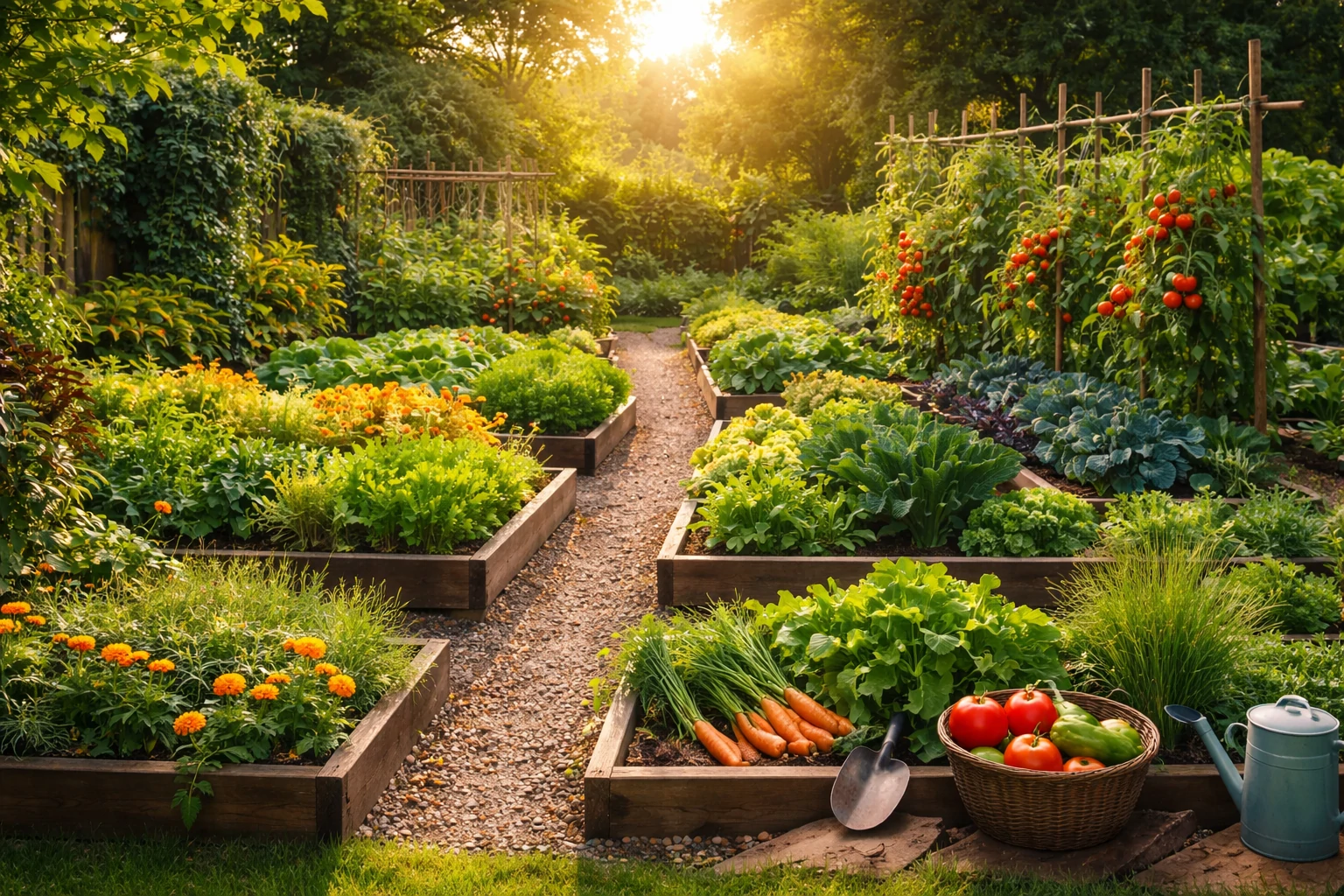
Designing a vegetable garden feels exciting. It gives you fresh food, a healthier lifestyle, and peace of mind. But growing vegetables does not start with seeds. It starts with a plan. A good layout and smart spacing can change everything. It helps plants grow stronger, keeps pests away, and saves water. It also makes the garden easier to manage.
Many new gardeners rush to plant without thinking about layout. They pick random spots, dig holes, and hope for the best. That method may work once, but not for long. A poor layout leads to weak growth, less harvest, and more work. If your tomatoes sit too close, air does not flow. If roots compete for water, crops suffer. Planning solves these problems.
Smart spacing also protects your time. It stops overcrowding, which often causes disease. It makes weeding simple and helps sun reach every plant. Whether you grow in a backyard, raised beds, or containers, spacing shapes success.
This guide covers everything you need to create a perfect vegetable garden plan. It includes layout styles, row spacing, plant combinations, and tips to fit your space. Each section uses simple words and gives real steps. You do not need years of experience. You just need the right start.
Why Garden Layout Matters
A garden layout is not just a map. It controls how your plants grow. A bad layout can waste space, block sunlight, or trap pests. A good one does the opposite. It keeps the garden neat, boosts airflow, and makes watering simple.
You want each plant to have enough room to stretch, bloom, and yield. Roots need their own space. Leaves need light. Crops like lettuce or radish grow fast, so you need a spot to replant often. Tomatoes or squash grow big, so they need wide zones.
A layout also sets the mood. A straight row garden looks formal. A circular garden feels soft and creative. Raised beds show clear borders. Containers offer freedom to move. Your layout can reflect your taste, but it must fit your space and your plants.
Choosing the Right Garden Style
Every gardener works with different space. Some have a big yard. Others use a balcony or side yard. You do not need acres of land. You just need to choose a plan that matches your setup. Below are common styles.
1. Traditional Row Layout
This layout works best in big spaces. You grow vegetables in long straight lines, often facing north to south. This gives even sun. You leave walking paths between rows.
Best for: Potatoes, corn, beans, peas
Path width: 12 to 24 inches
Row width: 18 to 36 inches depending on crop
2. Raised Bed Layout
Raised beds are frames filled with soil. They offer better drainage and prevent soil compaction. Beds can be made from wood, bricks, or metal.
Best for: All vegetables
Common size: 4 feet wide, 8 feet long
Spacing between beds: 18 to 24 inches for access
3. Square Foot Garden
This style divides the garden into small 1×1 foot blocks. Each block grows one or more plants, based on space needs.
Best for: Beginners, small backyards
Ideal plant use: 1 tomato per square, 4 lettuce, or 16 carrots
4. Container Garden
If you live in an apartment, use containers. Use pots, buckets, or grow bags. Make sure containers drain well.
Best for: Herbs, peppers, lettuce, spinach
Pot size: 12-18 inches deep depending on root size
5. Vertical Garden
Vertical layouts save space. You grow plants upward using trellises, walls, or towers.
Best for: Peas, pole beans, cucumbers
Support: Strong net or wood trellis
Keep Enough Space Between Plants
You cannot put plants too close. They need room for roots and leaves. Good spacing improves airflow. It helps stop mold and pests. Below is a general guide for spacing:
| Vegetable | Space Between Plants | Space Between Rows |
|---|---|---|
| Lettuce | 8-10 inches | 12 inches |
| Carrots | 2-3 inches | 12 inches |
| Tomatoes | 18-24 inches | 30-36 inches |
| Beans (Bush) | 4-6 inches | 18-24 inches |
| Beans (Pole) | 4-6 inches | 24-36 inches |
| Peppers | 12-18 inches | 18-24 inches |
| Cucumbers | 12 inches | 36-48 inches |
| Spinach | 4-6 inches | 12 inches |
| Broccoli | 18 inches | 24-36 inches |
Always check seed packets or plant tags. They give exact spacing for that variety.
To get more seasonal growing tips, visit this garden advice by Homenumental post. It shares practical ideas to improve your outdoor space over time.
Sample 20×40 Vegetable Garden Layout
A 20×40 foot garden gives you 800 square feet of growing space. That is enough room for many crops. You can mix rows, raised beds, or small blocks. This sample layout uses rows with walking paths between.
Here is one way to fill this space:
North End (40 feet wide)
-
-
2 rows of tomatoes (spaced 24 inches apart)
-
1 row of peppers (spaced 18 inches apart)
-
Middle Area
-
-
2 rows of green beans (pole or bush)
-
1 row of cucumbers with a trellis
-
1 small patch of carrots and radish in front
-
South End
-
-
2 rows of lettuce and spinach
-
1 herb strip with basil, dill, and parsley
-
Leave 18–24 inch paths between rows. Group crops by height so taller plants stay in the back. Use mulch to keep weeds down. Rotate crops next year to protect the soil.
This layout feeds a small family and stays easy to manage.
How to Make a Garden Plan
Planning your garden helps avoid mistakes. Start with paper and pencil. You can also use free garden planner apps online. Here’s a step-by-step list:
Step 1: Measure Your Space
Use a tape measure. Draw the area. Mark length and width. Note sunlight hours. Watch for shady spots.
Step 2: List Your Crops
Pick what you want to grow. Choose based on season, climate, and use. Start with 4–6 vegetables.
Step 3: Group Plants by Type
Put tall crops on the north or back side. They should not block sun. Group similar water needs. Place fast growers near paths.
Step 4: Add Pathways
Leave 12-24 inches between rows or beds. This lets you walk and weed without stepping on plants.
Step 5: Add Labels
Mark each crop on your plan. Write its name and spacing. Use arrows to show sunlight.
Free Vegetable Garden Layout Planner Tools
You do not need special software to plan a garden. But free tools can save time and offer fresh ideas. These planners let you map your space, place crops, and move things around. Some also give planting tips based on region.
Here are three tools you can try:
1. Gardener’s Supply Garden Planner
This tool works well for raised beds. It uses drag-and-drop boxes. You can print your plan or save it online.
2. GrowVeg Planner (Free Trial)
This site offers a free trial version. It helps with crop rotation, spacing, and succession planting. It suits both beginners and advanced gardeners.
3. Vegetable Planner PDF Sheets
Many gardening blogs offer free printables. These include grid pages, plant spacing charts, and checklists. You can use these with pencil and paper to stay simple.
Pick the one that fits your style. Use it to plan your garden before you dig.
Companion Planting Tips
Some plants help each other. Others do not get along. Companion planting boosts growth and protects crops.
Good companions:
-
Tomatoes + basil = better flavor, fewer pests
-
Carrots + onions = repel flies
-
Corn + beans + squash = the “Three Sisters” work in balance
Bad combinations:
-
Beans + onions = slow each other
-
Tomatoes + corn = attract same pests
Plan your layout to keep good partners near.
Change Your Layout with the Seasons
Garden plans should change with seasons. Spring plants may differ from summer ones. Rotate crops to stop soil disease. Move heavy feeders like corn or cabbage to a new spot next year.
Here’s a simple layout change idea:
- Spring: lettuce, radish, peas
- Summer: tomatoes, beans, cucumbers
- Fall: spinach, carrots, beets
Use removable markers. Keep a garden journal to track what worked.
Check the Sun and Shade Before Planting
Most vegetables need 6-8 hours of sun. Some need less. Plan tall plants away from small ones. Do not let one crop block another.
Full sun crops: tomatoes, peppers, squash
Partial sun crops: lettuce, spinach, kale
Shade-tolerant herbs: parsley, mint, chives
Watch your garden at different times. Note how shade moves.
Watering Zones and Irrigation
Your layout affects watering. Group crops with the same water needs. Drip lines or soaker hoses work well in raised beds or rows.
Dry zone crops: tomatoes, beans, onions
Moist zone crops: lettuce, celery, cucumber
Place thirsty plants where you reach often. Mulch around them to keep soil wet.
Pest Prevention in Layouts
Good spacing helps stop pests. Crowded leaves trap bugs. Smart paths help you spot problems early.
Use borders of flowers or herbs to repel pests. Try:
- Marigolds to keep beetles away
- Nasturtiums to trap aphids
- Basil to block flies near tomatoes
Avoid large mono-plant patches. Mix rows to confuse pests.
Raised Bed Sample Plan (4×8 Feet)
This simple layout helps a beginner grow fresh food.
| Bed Section | Crop | Spacing |
|---|---|---|
| Left 2 ft | Lettuce, spinach | 8-inch spacing |
| Center 2 ft | Tomatoes (2) | 24-inch spacing |
| Right 2 ft | Carrots, radish | 3-inch spacing |
| Front 2 ft | Herbs (basil, dill) | 12-inch spacing |
Leave 18 inches between beds. Add mulch in paths.
Make the Most of Small Garden Spaces
Not everyone has a yard. That’s fine. You can still grow food. Use pots, wall planters, or grow bags.
- Use tiered shelves or vertical racks
- Place pots on rolling carts for sun
- Pick compact or dwarf plant types
- Try indoor herbs near windows
Even one tomato pot or lettuce tray can improve meals.
Don’t Make These Garden Planning Mistakes
- Planting too close together
- Ignoring sunlight direction
- Forgetting paths
- Mixing poor companions
- Reusing the same layout every year
- Not checking plant labels
You can avoid these with a bit of planning.
Where to Find Garden Layout Photos for Inspiration
Sometimes you need to see a garden to plan your own. Photos show shape, color, and layout in ways words cannot. They also help you spot ideas you may not think of yourself.
Here are a few places to find good photos:
Search for “vegetable garden layout” or “raised bed design.” You will see hundreds of real garden pictures, drawn plans, and beginner tips.
Google Image Search
Type in layouts like “20×40 vegetable garden” or “square foot garden.” Use the “Tools” tab to sort by size or time.
Gardening Blogs and Magazines
Websites like Better Homes & Gardens, Almanac, and gardening forums often show detailed layout pictures. Look for photo tours or small space tips.
YouTube Garden Tours
Many gardeners post walk-through videos of their backyard or container gardens. This helps you see size, spacing, and plant growth.
Save pictures that match your space. Then draw your own plan based on what you like. You do not need to copy it all. Just take the best parts and make them yours.
A Few Last Words on Planning Your Garden
A vegetable garden offers more than fresh food. It builds peace, focus, and health. But every harvest starts with the right layout. Planning where each plant goes, how far apart they sit, and which crops support each other sets the tone for your garden’s success.
You do not need expensive tools or endless space. You need simple steps, clear ideas, and a little time to plan. Whether you build rows in the ground, fill raised beds, or line up pots on a porch, spacing and layout shape the results.
Start small. Use paper. Draw boxes and rows. Think about sun, water, and your time. Pick easy crops. Space them with care. Let the layout grow with you, season by season.
Each year, you will learn what works better. Your plan will improve. Your harvest will grow. That is the beauty of a well-planned vegetable garden.
“A garden is not a place. It’s a journey.” — Monty Don
You can also explore sustainable and creative outdoor designs by KDArchitects for layout ideas that balance function and beauty.