Some walls do not rise all the way to the ceiling. They stop halfway. These short walls often blend into the background. Many people never notice them.
But these small structures do an important job. You may find one near a sloped ceiling in an attic, above a staircase, or inside a second-floor bedroom. Builders call them knee walls. They help shape the space, support roof angles, and make low areas useful.
A knee wall turns a hard-to-use spot into something practical. It may hold insulation, support the roof, or create extra storage. In homes with slanted ceilings, this wall makes the space easier to walk through. It brings balance to rooms that would otherwise feel cramped or awkward.
This article gives a full look at knee walls. You will learn what they are, why they matter, where you find them, and how to use them. If your home includes upper floors, pitched roofs, or small corners, understanding knee walls can help you plan better and avoid common mistakes.
What Is a Knee Wall?
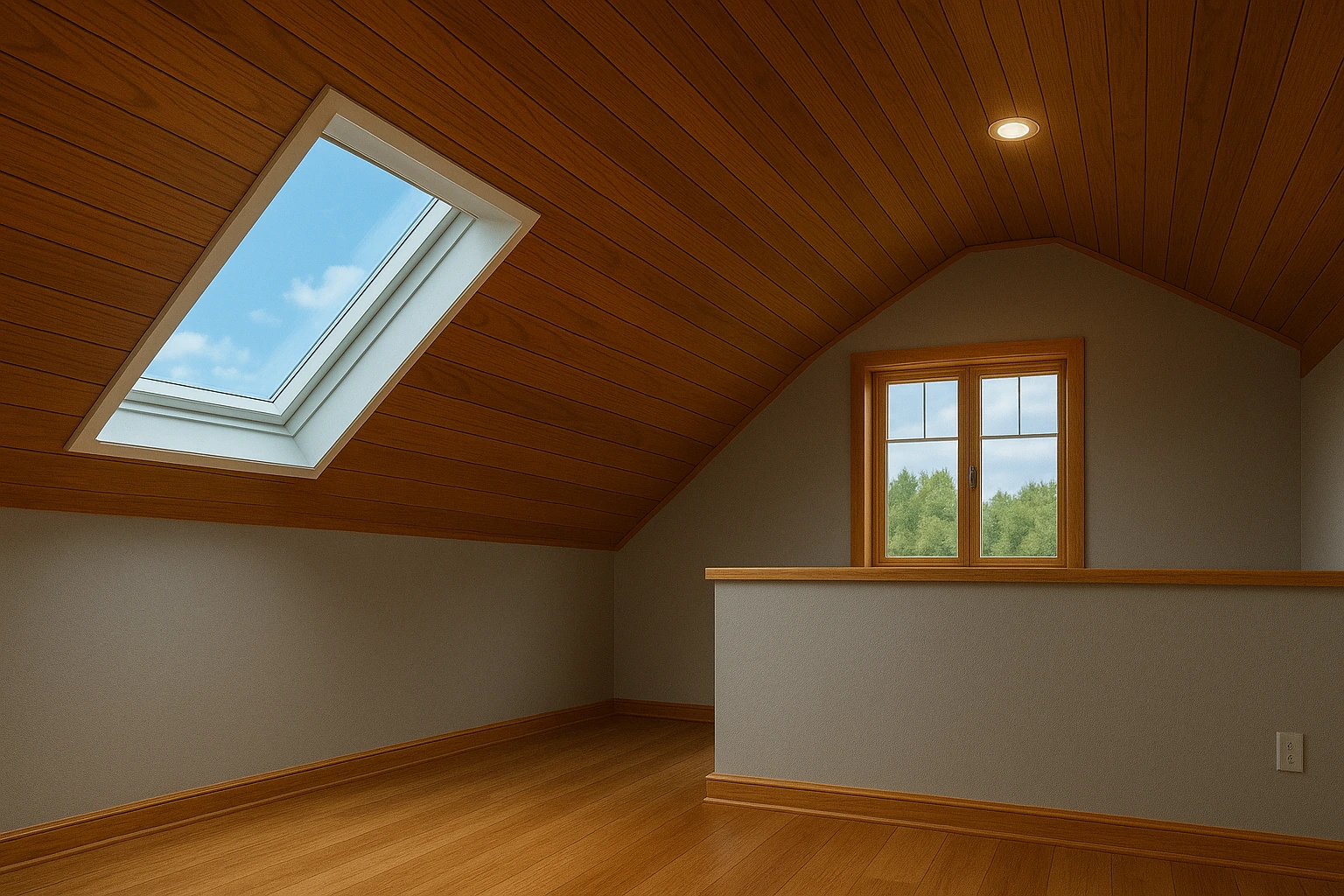
A knee wall is a low interior wall built where a sloped roof meets the floor. It does not stretch to the ceiling. Most stand between two and four feet tall, depending on the roof angle and room size.
You often see knee walls in attic spaces or upper-level rooms with pitched ceilings. They help shape the space, create straight lines, and make low zones easier to use. In many homes, they hide awkward corners and add balance to the layout.
Some knee walls support roof rafters and carry weight. Others simply close off space that is too low to walk through. Builders also use them to hold insulation, wiring, or built-in shelves.
These small walls may look minor, but they serve a big purpose. They can support structure, improve comfort, and give the room a cleaner finish. Many homeowners use them to add storage or to divide open areas without blocking light or air.
What Is a Knee Wall Also Called?
A knee wall may go by different names depending on the builder or region. Some people call it a short wall or half wall. Others refer to it as a knee partition.
In attic spaces, contractors may describe it as a sloped ceiling wall. In design plans, it may appear as a partial interior wall. These names describe the same basic structure.
Even though names vary, the purpose stays the same. A knee wall always stands below a roof slope and helps shape or support the space.
Common Places Where Knee Walls Appear
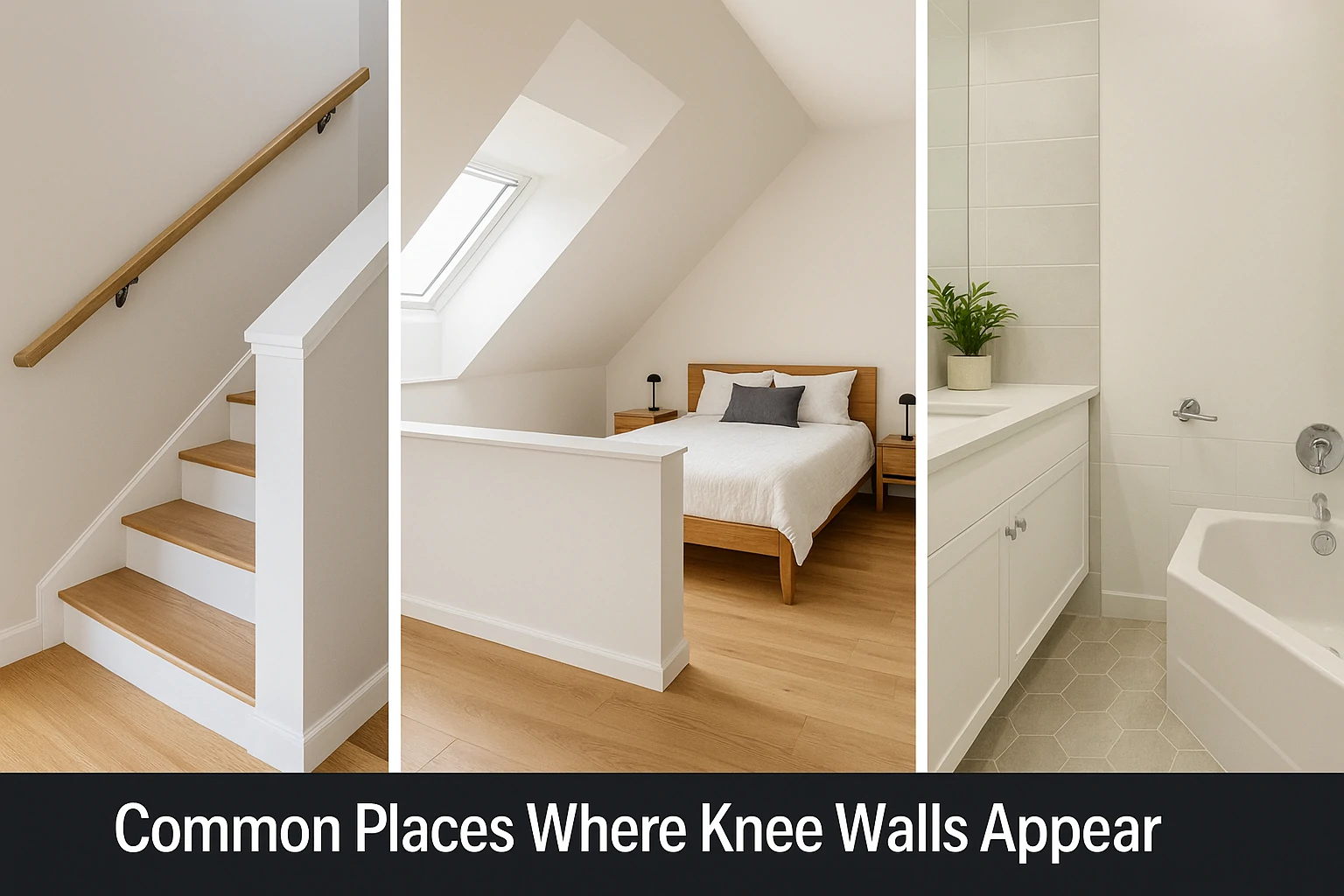
Knee walls show up in many home areas. Some act as support. Others improve space use.
1. Attics
Finished attics almost always use knee walls. They cut off the steepest part of the roof slope. This creates a cleaner edge and helps you move through the space without crouching. It also opens more room for storage or built-in cabinets.
2. Sloped Bedrooms
Upper-level rooms often include knee walls near the edge of the ceiling. These walls shape the layout and help place beds or dressers in a way that avoids low roof angles. Some also cover gaps between the floor and the slant.
3. Loft Spaces
Lofts may use knee walls to separate sitting areas, beds, or small offices. Unlike full walls, they allow air and light to move across the space. This keeps the loft feeling open but still gives structure.
4. Staircases
Some staircases use a knee wall instead of an open railing. This gives a solid look and makes the stairs feel enclosed. It also offers a spot to install lights, outlets, or display items.
5. Bathrooms Under Rooflines
Bathrooms built under sloped ceilings often include short walls beside tubs or sinks. The knee wall protects against low angles and adds space for ledges, shelves, or tile finishes.
In each case, the goal is the same. The knee wall makes angled areas more useful and safe.
What Is a Knee Wall in a Bathroom?
A knee wall in a bathroom is a short wall built near a sloped ceiling or around fixtures. Builders often place it beside tubs, showers, or sinks under angled roofs.
This wall protects users from low ceiling edges. It also provides space for tile, shelves, or plumbing lines. In some bathrooms, it helps create a cleaner layout without full walls.
Bathroom knee walls often include waterproof finishes. Tile or sealed panels help protect against moisture. Proper sealing matters to prevent damage over time.
In small bathrooms, this wall improves comfort and safety. It also adds useful surface space without closing the room.
Why Builders Use Knee Walls

Builders install knee walls to solve practical problems. These walls help shape rooms, protect roof lines, and improve how space works.
Improves Usable Space
Rooms with sloped ceilings often waste floor area. A knee wall stops the slope early. This makes it easier to stand near the edge. It also creates clean lines for furniture and movement.
Adds Storage Options
The area behind a knee wall often holds hidden closets, drawers, or shelves. These help store items in tight corners. Builders turn unused space into something useful without changing the roof.
Supports Roof Structure
In some homes, the roof needs help to stay stable. A knee wall can hold up part of the rafters. It keeps the roof from shifting or sagging over time.
Helps with Insulation
A knee wall can seal off cold attic zones. When placed along exterior slopes, it allows better insulation between the living space and the roof. This keeps rooms warmer and saves energy.
Improves Room Layout
Sloped ceilings make room planning harder. A knee wall creates a clear edge. This helps with bed placement, seating areas, or built-in storage.
“Our Attic Felt Bigger Overnight”
We added a 3-foot knee wall during a loft remodel. It gave structure to the slope and created room for hidden storage drawers. The space now feels cozy, clean, and complete.
What Is a Knee Wall in Construction?
In construction, a knee wall is a short framed wall built below a sloped roof. Builders use it to manage roof angles and support interior layouts. It helps define where living space ends and roof slope begins.
Some knee walls carry part of the roof load. These connect directly to rafters and floor framing. Others do not carry weight and exist only to shape the room or hold insulation.
Construction plans often include knee walls in attic conversions and upper floors. Builders must follow framing rules and local codes when installing them. Incorrect placement can affect roof stability or insulation performance.
In simple terms, a knee wall in construction helps control space, structure, and comfort in areas where full walls cannot fit.
Main Types of Knee Walls
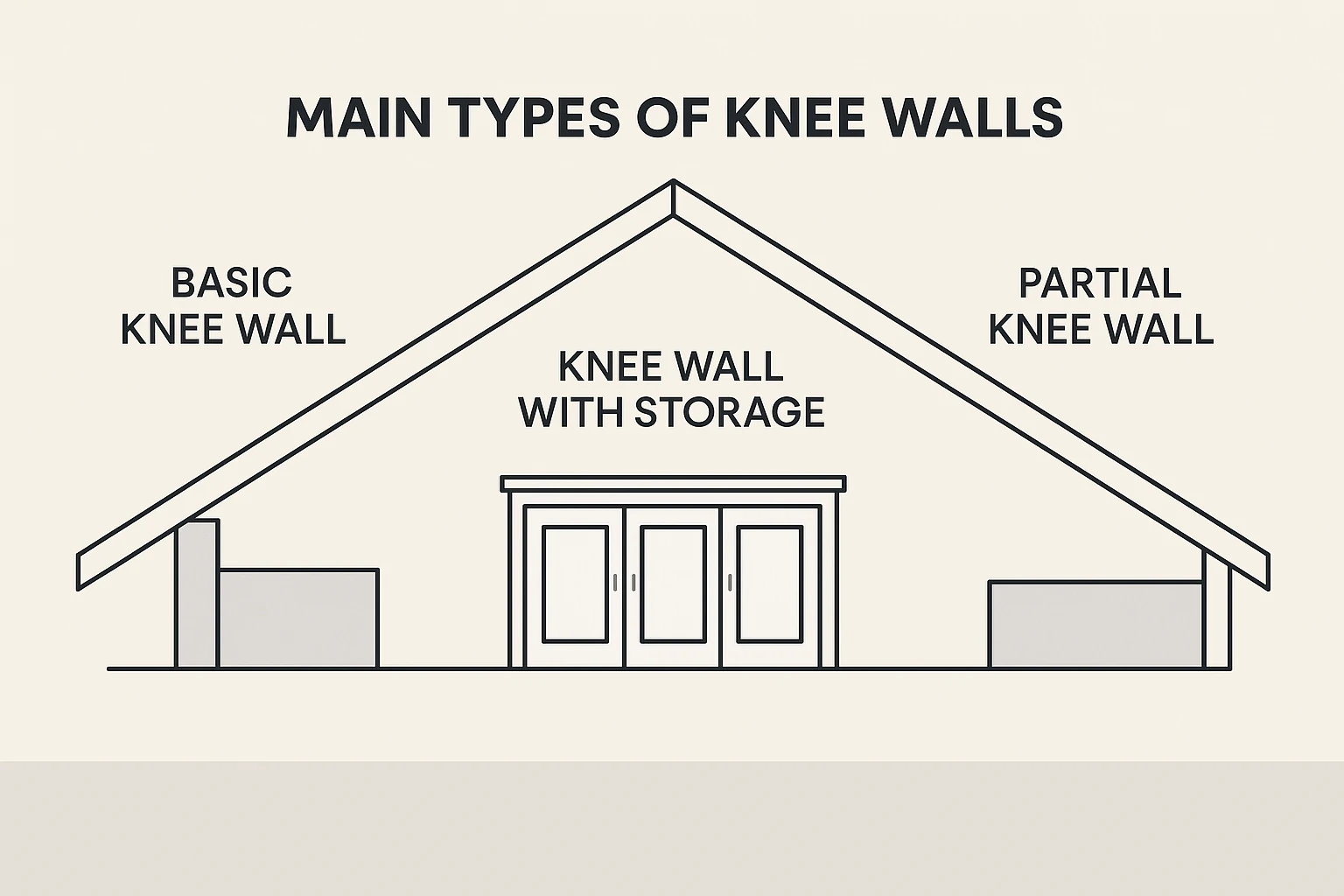
Knee walls may look alike, but they do different jobs. Each type helps the home in a specific way. Some offer support. Others shape the space or add comfort.
1. Structural Knee Wall
This wall helps hold up the roof. It sits under the rafters and keeps them from sagging. You often see this type in older homes or finished attics. Removing it can weaken the roof and cause long-term damage.
2. Non-Structural Knee Wall
This wall does not support weight. It only shapes the room or hides the slope. You can move or remove it without harming the frame. Many builders use this type to improve layout or add a cleaner look.
3. Half-Length Knee Wall
This short wall does not run the full length of the room. It acts as a divider, shelf base, or safety edge near tubs or stairs. Homeowners use it to create zones without closing off the space.
4. Insulated Knee Wall
This wall appears in cold regions. It holds insulation between the room and attic. Builders fill it with foam or fiberglass to stop cold air and trap heat. It helps keep upstairs rooms warmer in winter.
Each type serves a unique purpose. Always check the wall before removing, cutting, or replacing it. One change could affect safety, comfort, or structure.
Knee Wall vs Pony Wall
Many people confuse knee walls with pony walls. They look similar, but they serve different purposes. Knowing the difference helps avoid design and construction mistakes.
A knee wall usually appears under a sloped ceiling. Builders place it where the roof angle meets the floor. Its main job is to shape attic or upper‑floor spaces. Some knee walls support roof weight. Others only cover low areas.
A pony wall stands on a flat floor and does not connect to a roof slope. It often divides rooms or adds safety near stairs, kitchens, or bathrooms. Most pony walls do not support roof weight.
The key difference lies in location and purpose. Knee walls work with roof angles. Pony walls work as partial room dividers. Both stay short, but their roles are not the same.
Want resale value? See real estate tips from Invest1now.com.
How to Tell If a Knee Wall Supports Weight
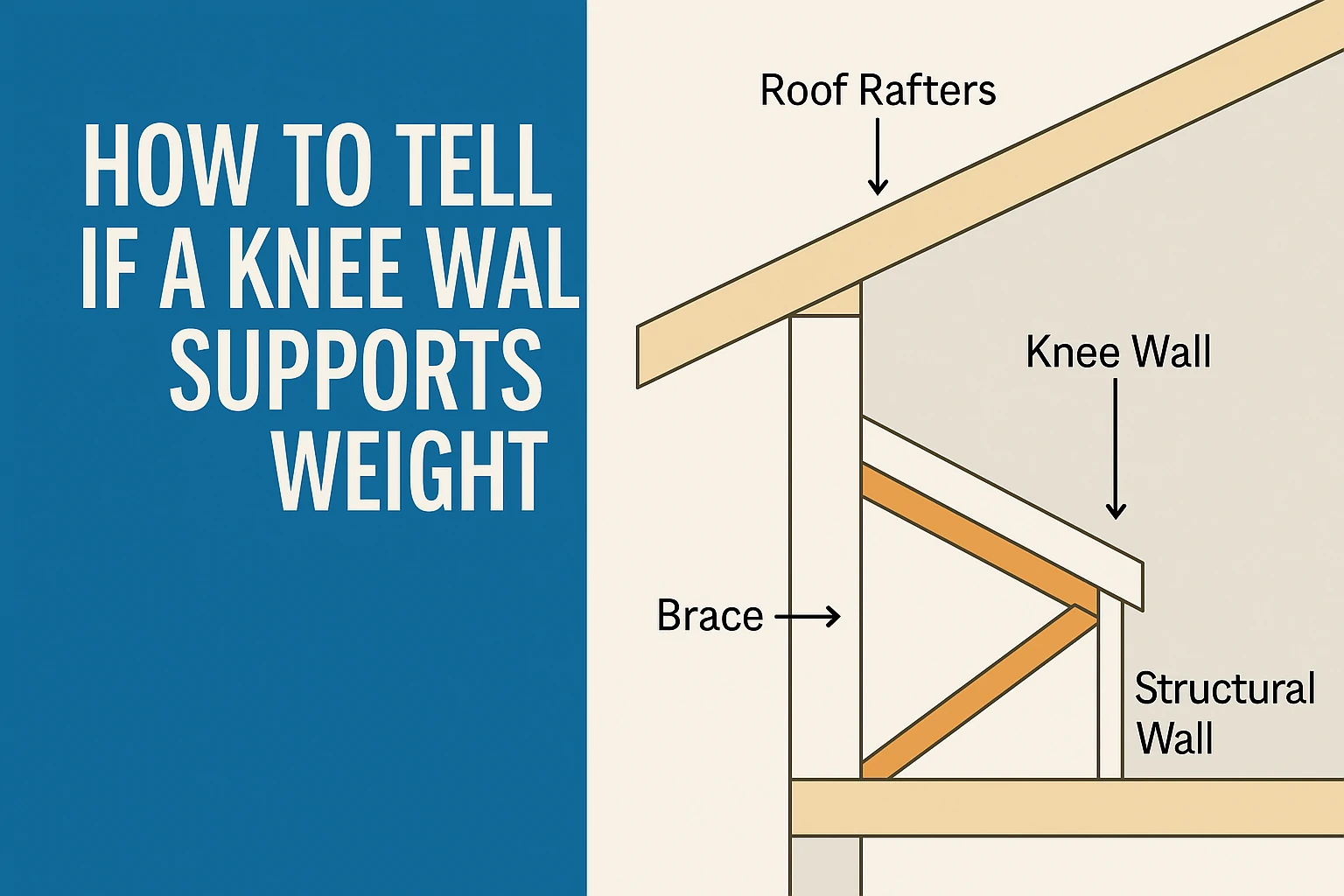
Not every knee wall looks important, but some hold serious weight. Before removing or cutting into one, you must know its purpose. A wrong move can weaken your roof or damage the structure.
Check the Rafters Above
Look where the roof rafters meet the wall. If they end right on top of it, the wall likely helps support the roof. The roof’s weight may rest at that point. If so, you should not remove it without adding support elsewhere.
Look at How the Wall Connects
See if the wall ties into both the floor and the roof frame. A full connection at both ends suggests the wall is structural. This means it helps the home carry weight safely.
Tap and Press the Surface
Try to push on the wall. A solid, firm feel may mean it holds part of the frame. Thin walls that shake or feel hollow often serve only as room dividers or covers for insulation.
Ask a Licensed Professional
Do not guess. A builder, contractor, or structural engineer can check and confirm the wall’s role. They know how to inspect the frame and test safely. Making changes without help can cause sagging, leaks, or worse.
When You Should Remove a Knee Wall

Some knee walls help the home. Others create problems. If a wall blocks light, limits space, or breaks the flow of a room, you may want to take it out. But do it with care.
Open the Room
Tight spaces feel cramped with extra walls. A knee wall can close in the room and limit movement. Taking it out may create a more open layout and make the ceiling feel higher.
Match a Modern Look
New homes often follow open floor plans. Fewer walls help light travel across rooms. Removing a knee wall may support a cleaner design with straight lines and open corners.
Fit More Furniture
Beds, desks, or cabinets may not fit well under a slope. A knee wall reduces the usable wall length. Taking it out gives more room to place furniture along the edge.
Build Better Storage
Some homeowners replace a knee wall with custom drawers, shelves, or seating. These features may fit the angle better and offer more function than a short plain wall.
Let in More Natural Light
Walls near windows can block light. A short wall may limit how far sunlight reaches across the floor. Removing it can brighten the room and make it feel larger.
Always check first. If the wall holds any roof weight, you need expert help. Never remove a knee wall unless you know it is safe.
Thinking about layout changes or attic renovations? It helps to know how regional lifestyle and home styles compare. Here’s a full guide on the pros and cons of living in Atascadero, CA.
Mistakes to Avoid with Knee Walls
Knee walls may seem simple, but small errors can lead to big problems. Before you build or remove one, learn what to avoid.
Removing Without Checking First
Some knee walls hold up part of the roof. Taking one out without support can cause the roof line to sag or shift. Always confirm the wall is not structural.
Skipping Proper Insulation
Walls that touch attic space must seal off cold air. A bare wall without insulation leads to heat loss, cold spots, and higher energy bills. Use quality materials to keep the room warm.
Covering Up Important Systems
Knee walls often hide wires, ducts, or pipes. Sealing the wall without leaving an access point creates trouble later. Always plan for easy reach when needed.
Picking the Wrong Height
A wall that’s too short may not help much. A wall that’s too tall takes up usable space. Measure the roof slope and choose a height that fits the room’s function.
Leaving the Wall Unfinished
Rough drywall or exposed studs look out of place. Add baseboards, paint, or trim so the wall matches the rest of the room. A smooth finish improves comfort and value.
Use painter’s tape on the floor to mark your proposed knee wall before building. This helps test how much floor space it will take and shows how furniture will fit once it’s built.
Simple Knee Wall Design Ideas

A knee wall can do more than just hide a slope. Here are some ways to turn it into a feature:
Bookshelves
Frame open shelves between the studs. Use them for books, towels, or toys.
Hidden Closets
Add doors or sliding panels behind the wall to store off-season clothes or boxes.
Room Divider
Use a short wall to separate bed from seating in a loft without closing the space.
Bathroom Ledge
A low wall beside a tub offers space for soaps and bottles. It can also hide pipes.
Outlets and Switches
Use the wall for electric needs without cutting into full walls. Add USB ports or night lights.
Built-in Seating
Top a wider knee wall with a padded bench. Store items inside or use it as a reading spot.
Pros and Cons of Knee Walls
Let’s compare the good and bad sides of using knee walls.
| Pros | Cons |
|---|---|
| Adds structure to sloped rooms | May limit headroom |
| Offers hidden storage | Not always needed in modern homes |
| Improves insulation in tight areas | Can block natural light |
| Supports roof framing if required | May take up valuable floor space |
| Frames the room with clean balance | May need a permit in some remodels |
Cost of Adding or Removing a Knee Wall
| Task | Estimated Cost Range |
|---|---|
| To Build: | |
| DIY framing and drywall | $300 – $900 |
| Professional framing with trim | $800 – $2,000+ |
| To Remove: | |
| Non-structural wall | $300 – $1,000 |
| Structural wall (with support beams) | $2,500 – $5,000+ |
| To Insulate: | |
| Fiberglass batts | $1.50 – $3.00 per sq ft |
| Foam board with vapor barrier | $3.50 – $6.00 per sq ft |
Always check if permits or inspections are needed. These may add extra cost but help ensure safety and code compliance.
Knee Walls in Old Homes vs. New Homes
Older homes often used knee walls to work around attic slopes. You’ll find them in Cape Cod houses, farmhouses, or bungalows.
In these homes, walls may hide old wiring or leaks. They may also lack insulation. If you renovate, open the wall and check the materials inside.
New homes sometimes avoid knee walls unless needed. But designers now use them for cleaner layouts, modern storage, or structural savings in upper floors.
Some builders even install decorative knee walls in large rooms to break up space without adding full-height barriers.
When You Can Skip a Knee Wall
Not every home needs this feature. You may not need a knee wall if:
- The roof uses engineered trusses with no interior load points
- The slope does not drop close to the floor
- You want full-height cabinets or windows along that wall
- You prefer open space or vaulted ceilings
- The home uses spray foam insulation under the entire roof deck
Talk to your builder to confirm. In some cases, skipping the wall works better.
Planning your attic or upper floor remodel? You might want to blend function with modern looks. Check out these 6 smart home design ideas by KDArchitects that match style with space-saving.
Conclusion
A knee wall may not stand tall, but it plays a big role. It cuts off sharp slopes, supports weak points, and shapes the way rooms feel. It helps turn tight corners into storage or smooth walking space.
These short walls add structure and balance in places where full walls cannot fit. They can support part of the roof, seal off cold air, or give the room a cleaner look. In small rooms, they often do more than you expect.
Not every home needs a knee wall. Some rooms feel better without them. But in the right space, they fix problems you may not notice until they’re gone.
Use knee walls with purpose. Build them with care. Check what they do before you take them out. When done right, a simple knee wall adds value, comfort, and smart design to any home.